Still accomplishing so could appear at important expense: undermining Biden’s initiatives to rebuild domestic production and build work opportunities at home.
Trump’s lumber and steel tariffs, launched in 2017 and 2018 respectively, have been aimed at safeguarding American market and positions versus alleged unfair trade methods — and the metal marketplace claims they have been necessary to preserving the sector afloat throughout the pandemic. But the logic of the tariffs is being undermined by not only provide shortages but also breathtaking price tag spikes.
400% spikes
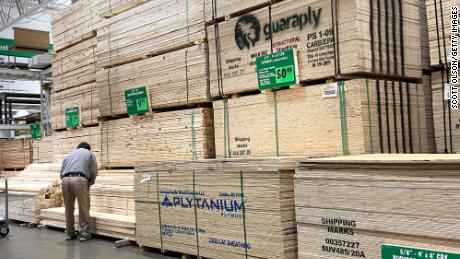
Regardless of a 20% pullback in current months, random-duration lumber futures are nevertheless up far more than 400% from their April 2020 lower. Lumber charges have skyrocketed so a great deal that it truly is triggering remodeling nightmares and producing even additional sticker shock in the booming housing current market.
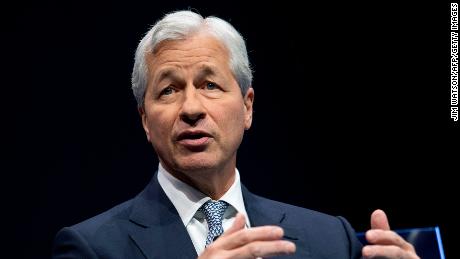
“That won’t make a great deal of financial sense if the difficulty is that domestic creation is inadequate,” mentioned Robert Dietz, main economist at the NAHB. “It appears crystal clear. This is Adam Smith-variety stuff,” he mentioned, referencing the Scottish economist identified as the father of capitalism.
‘Prices are even now in the stratosphere’
Furthermore, rates for US incredibly hot-rolled, coil metal, the most extensively manufactured concluded steel merchandise, have spiked virtually 270% since bottoming out past August and hit a history higher of $1,616 per ton on Friday, according to S&P World Platts. Before this increase, the prior peak was $1,100 in 2008.
The Trump tariffs and quotas that restrict imports, imposed in 2018 to fight metal dumping by China and some others, are only including to the stress.
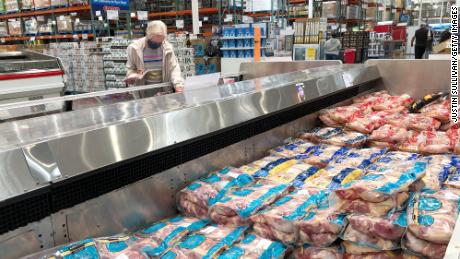
“Steel rates are still in the stratosphere,” reported Phil Gibbs, director of metals equity investigate at KeyBanc Capital Markets. “It evidently factors to the simple fact that the tariffs shouldn’t be there. The ideal matter, in my belief, is to take them off.”
Some company teams are clamoring for the White Dwelling to do just that, particularly as inflation fears mount.
“These tariffs are needlessly constraining source in a way that is hurting the economic recovery,” John Murphy, senior vice president for worldwide policy at the US Chamber of Commerce, instructed CNN Business.
Murphy, whose firm opposed the Portion 232 metal tariffs from the starting, argued tariff reduction is a way govt can assistance speed up the recovery when concurrently easing inflation jitters.
“To have a potent and sustainable restoration, we have to have a extensive strategy to tackle shortages and bottlenecks from workforce to raw materials like metal and lumber,” he explained. “Trade policy really should definitely engage in a part in this article.”
Rust Belt work in focus
Peter Boockvar, chief investment officer at Bleakley Advisory Group, said it would “definitely” make perception to eliminate the lumber and metal tariffs.
“But they never want to be viewed as rolling about to China, or even Canada,” he stated. “They’re generating political conclusions, not economic ones.”

In the meantime, equally the metal and lumber industries are strongly urging Biden to retain the tariffs in area. Getting rid of them could verify to be politically unpopular, in particular among the metal workers in battleground Rust Belt states.
“Why would you kneecap the domestic steel field when you want to devote $2 trillion on infrastructure?” questioned Rob Scott, senior economist and director of trade and manufacturing plan study at the Economic Plan Institute. “It would be like using a sledgehammer to kill a flea.”
Scott argued the metal tariffs effectively supported the industry and that eliminating them, together with quotas limiting imports, would guide to equally a “hemorrhaging of employment” and importing metal that is in numerous circumstances even worse for the setting than what is produced in The us.
“It will mean the metal we are importing to establish our infrastructure will build jobs in China and the European Union, not listed here,” he explained.
Biden: It really is not like flipping on a mild switch
The Biden administration does not surface to have created a determination nevertheless on lifting the metal or lumber tariffs, however new attempts are remaining made to handle soaring inflation issues.
Biden declared late very last week his administration will soon acquire unspecified steps to combat supply chain pressures, beginning with building materials and transportation bottlenecks.
“You cannot reboot a world wide economic climate like flipping on a gentle change. You will find heading to be ups and downs,” Biden mentioned in the course of remarks in Cleveland.
A White Residence spokesperson told CNN Business enterprise the hard work Biden announced will pursue “every avenue that could aid decrease bottlenecks and reinforce our financial recovery.”
The spokesperson said the Biden administration proceeds to carefully critique the Trump administration’s trade procedures and that evaluation will notify the future steps.
“Tariffs are 1 tool in the toolbox to assistance American workers and American business,” the spokesperson stated.
The China factor
Soon after conference with dwelling making executives last week, US Commerce Secretary Gina Raimondo pledged to detect “specific actions” the federal government and market can consider to address provide chain constraints that are posing a “really serious obstacle” to the residential building field.

Danielle DiMartino Booth, CEO and chief strategist at Quill Intelligence, questioned the logic of trying to keep the Part 232 countrywide safety metal tariffs in put on the EU, particularly specified that China, not Europe, is the most important supply of low-cost steel.
“If we want to be most able of combating China, it really is heading to have to be with the guidance of our allies, kinds we alienated all through the Trump administration,” she mentioned.
‘The tariffs should continue to be in place’
The steel business, however, is in no hurry to say goodbye to the tariffs that have despatched steel stocks to moon.
Likewise, the US Lumber Coalition, an alliance of big and modest softwood lumber producers, identified as on Biden to hold lumber tariffs on Canada in place till its unfair trade practices are resolved.
Ultimately, Biden will have to balance these concerns with fears of an overheating financial system and cost spikes squeezing families and enterprises. How Biden decides the tariff problem could aid telegraph how anxious he genuinely is about inflation.
About the Author